
Water softeners
The only system here that actually removes hardness — and therefore the only one that protects the building.
What a softener does
A water softener runs your incoming supply through a resin bed that swaps calcium and magnesium ions for sodium ions. The minerals stay in the resin; the water leaving the unit is soft. Periodically the resin is flushed with brine, the collected hardness goes down the drain, and the cycle starts again.
That mechanism is why a softener is the only system on this site that changes what your plumbing and appliances are exposed to. Filtration improves what the water tastes like. Conditioning changes how the minerals behave. Only softening takes the hardness out.
What changes in the house
- No new scale forms in the pipes, water heater, dishwasher or washing machine
- Glassware and dishes come out without spotting or white film
- Soap and detergent lather properly, so you use noticeably less
- Less soap residue left on skin and hair; laundry stays softer
- Fixtures stop crusting and stay clean with far less effort
How the size is worked out
Softeners are rated by how many grains of hardness they remove between regenerations. The calculation is standard across the trade:
| Daily water use | 50 gallons × people in the home |
| Daily hardness load | Daily gallons × your hardness in gpg |
| Capacity needed | Daily load × 7-day regeneration cycle |
| Unit selected24k, 32k, 40k, 48k, 64k, 80k, 110k | Next standard grain capacity above that figure |
Why the control valve matters more than the tank
Two softeners of the same capacity can differ enormously in what they cost to run. A timer-based valve regenerates on a schedule whether or not you used the water. A metered valve regenerates on actual consumption and holds a reserve so you never run out mid-cycle. The metered valve is what keeps salt and water use down.
The installer fits Clack, Fleck and Pentair equipment and states that their Clack bottom-tank configuration uses about 30% less salt and water than a conventional build — roughly $200 a year. That figure is theirs rather than an independent measurement, and we label it as such.
What it costs to own
Installed cost is quoted after a site visit and depends on capacity, plumbing and placement. Ongoing costs are published:
| Service maintenanceEvery 5 years | $200 |
| Resin replacementEvery 15–20 years | $500–$800 |
| Onsite service, first year | Included |
| WarrantyLifetime on brine tank, tank housing and valve housing | 10 years |
Questions people ask about this
What size water softener do I need?
Multiply your water hardness in grains per gallon by roughly 50 gallons per person per day, by the number of people in the house, by a seven-day regeneration cycle, then round up to the next standard grain capacity. A four-person household on 14 grain water needs about 19,600 grains removed per week, which is a 24,000 grain unit. The calculator on this site does this for you using your city’s published hardness.
What is the difference between a water softener and a water conditioner?
A softener removes calcium and magnesium using ion exchange, so the water leaving it is genuinely soft. A salt-free conditioner does not remove anything; it alters how the minerals behave so they are less likely to stick as scale. A conditioner can reduce scale, but it will not stop hard-water spotting on glassware, will not soften laundry, and will not reduce soap use. If somebody sells you a conditioner as a softener, that is the difference they are glossing over.
Will softened water damage my water heater?
For a tankless unit or an electric heater, softening is straightforwardly good: PNNL found that water heaters running on softened water hold their efficiency across the unit’s life, while units on hard water lose it. There is one nuance worth knowing — the same body of research notes that very aggressive, fully softened water can accelerate corrosion of the sacrificial anode in a conventional gas storage tank, so the anode wants checking on its normal schedule. Your installer will raise this if you have a tank heater.
Source: Pacific Northwest National Laboratory, 2013 (opens in a new tab)
How much salt does a softener use?
It depends on the hardness, your household size and the control valve. A metered valve regenerates on the water you actually use rather than on a timer, which is what keeps salt consumption down. Crystal Clear Water states that the Clack bottom-tank systems they install use about 30% less salt and water than a conventional configuration, which they put at roughly $200 a year — that is their figure, not an independently verified one.
How much does a water softener cost installed?
It is quoted after a site visit, and we will not publish a number we cannot stand behind. Installed cost depends on the grain capacity your household needs, whether there is an existing loop, where the unit has to go, and whether drain and power are already close. The test and the quote are free and there is no obligation at the end of them.
Does a water softener actually pay for itself?
On hard enough water it can. The Water Quality Research Foundation study found that on sufficiently hard inlet water a softener can recover its cost in as little as a year on a tankless water heater installation, and peer-reviewed life-cycle research found that reducing limescale extends the expected lifespan of washers, dishwashers, and other hot-water appliances. Whether it pays back for you depends on your hardness and what equipment you are protecting, which is exactly what the free test establishes.
Source: Water Quality Research Foundation / Battelle Memorial Institute (opens in a new tab)
Who does the work
Meet the licensed team behind the work
This site does the measuring. Crystal Clear Water is the licensed team we partner with on every install — your trusted expert in water quality and energy-efficient home solutions. Here's what that license covers, what the warranty promises, and what people who've had them in the house actually said.
Crystal Clear Water LLC
The licensed team we work with on every install. State-licensed in California and operating in Orange County since 2008. If warranty work is needed years later, you get their crew — not a call center.
- License
- CSLB #872771
- Status
- Bonded & insured
- Operating since
- 2008
- Service area
- Orange County · Los Angeles County · Riverside County
Rating from Google Reviews, not collected by us. See the profile (opens in a new tab) · Verify the license (opens in a new tab)
Water softener systems
| Full system warranty | 10 years |
| Brine tank, tank housing and control valve housing | Lifetime |
| Free onsite service | 1 year |
Reverse osmosis systems
| Standard 5-stage reverse osmosis systems | 5 years |
| Free onsite service | 1 year |
| Filter replacement reminders and product support | Lifetime |
What upkeep costs later
| Softener service maintenanceEvery 5 years | $200 |
| Resin replacementEvery 15–20 years | $500–$800 |
Warranty and maintenance terms exactly as the installer publishes them. Source (opens in a new tab)
In their own words
“I can see why they have so many 5 stars. Got to give credit where credit is due, CCW was amazing. Quick to quote, quick to answer and easy to schedule. They arrived right on the dot and got my water softener system running fast. The guys who came were all honest, professional and friendly. Set up my unit outside and it looked super clean. I shopped around and their pricing was by far the best for the best system (Clack). I already recommended them to my family and now my sister is looking to get a system done by them too. Loving my soft water so far, thanks Tony and team!”
“Tony is very professional and knowledgeable. I spent $98 on an inspection from another technician, but they couldn't figure out why my water softener wasn't working. Another company then quoted me nearly $2,500 to replace the circuit board, resin, and other parts. Tony spent about 45 minutes and fixed everything for just a little over $300. Highly recommended!!!!”
“We had a wonderful experience with Crystal Clear Water. Tony came out and gave us a quote for a water softener and RO system hookup. The quote was detailed, competitive, and included everything we needed to make sure the softener worked properly. When it came time to do the job, the team showed up on time and asked clarifying questions to make sure it was done the way we wanted it. Once everything was all hooked up, they walked me through what was done and how we needed to care for it. I really appreciated how detailed they were and the fact that I received a text when they were on their way that included a picture and the name of the technician that would be arriving.”
The other systems
What each one is actually for, in plain terms.
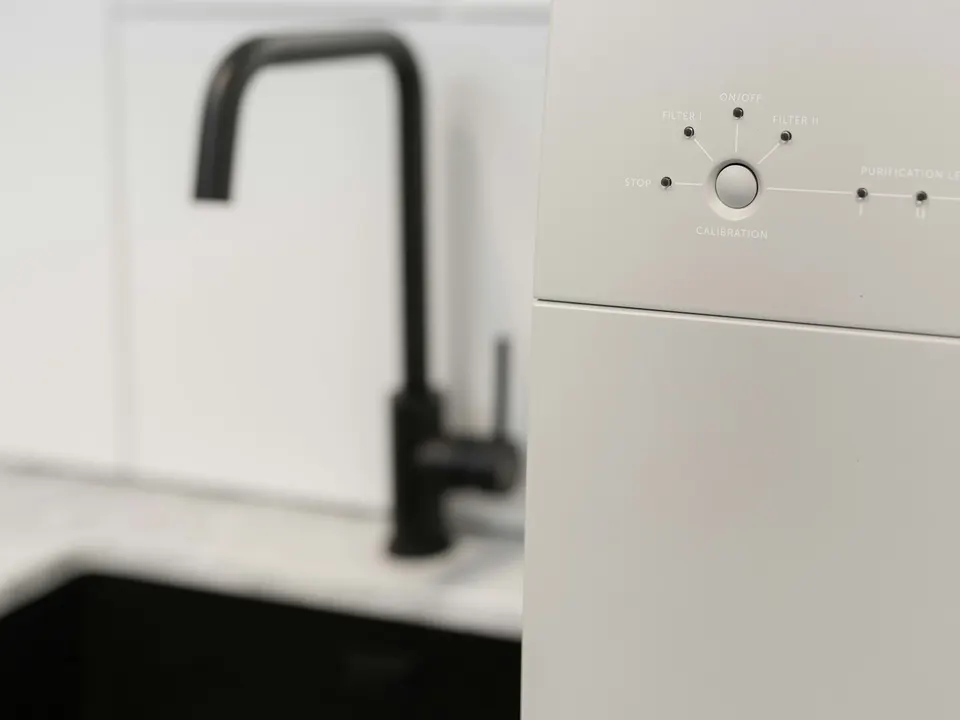 Reverse osmosis drinking water
A dedicated drinking and cooking tap, filtered down to the dissolved solids a softener leaves behind.
A softener treats the house; reverse osmosis treats the glass you actually drink from. Most households that install one install both.
 Whole-home filtration & conditioners
Carbon filtration for taste and odour, and salt-free conditioning where a softener is not an option.
Worth knowing before you buy: a conditioner prevents some scale but does not remove hardness. It cannot do most of what a softener does.
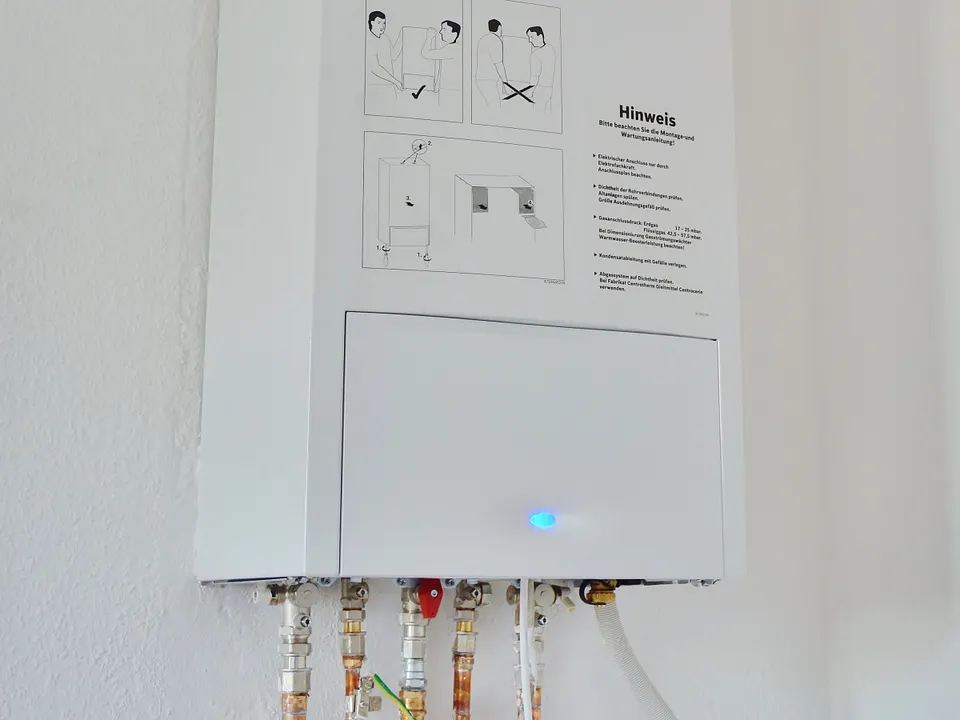 Tankless & tank water heaters
Supply and installation, and the softener that keeps a tankless unit from scaling shut.
Hard water and tankless heaters are a bad combination. If you are installing one in Orange County, size the softener at the same time.
 Commercial & office
Commercial softeners, commercial reverse osmosis, and bottleless office drinking water.
For restaurants, salons, offices and property managers. Bottleless coolers usually replace a delivery contract outright.
Book the free water test
A licensed installer tests your tap, checks the plumbing loop, sizes the system and quotes it. No charge, and no obligation at the end of it.
- We send your details to the installerCrystal Clear Water LLC, CSLB #872771.
- They call to arrange a timeUsually the same day, and they work around your schedule.
- They test, size, and quote on siteYou get the number for your tap, not your district’s average.